Can you sell phone photos online in India? Yes. Here's what sells and where
A phone camera is enough for stock sites, product photos and small events. What each buyer needs from the file, and where a phone still falls short.
4 min read
Yes. No website that sells photos asks which camera you used. They check the file: is it big enough, is it sharp, and do you have the right to sell it. A recent phone passes the first test easily. The other two are up to you.
This post covers what the file needs, which phone photos people pay for, where to sell them from India, and the jobs a phone still can't do.
What the file needs
Size. Shutterstock and Adobe Stock both ask for at least 4 megapixels. Shutterstock's technical requirements give the sum: width × height, so 2000 × 2400 pixels is 4.8 MP and passes. Phones have shot 12 MP or more for years, so size is not your problem. (Checked on 12 November 2026.)
Format. Stock sites want JPEG. iPhones save HEIC by default, so either switch the camera to "Most Compatible" in settings or export as JPEG before you upload.
Sharpness and noise. This is where phone photos get rejected. Stock reviewers look at the photo at full size. Night shots, digital zoom and heavy "beauty" processing fall apart at that size. Shoot in good light, don't zoom with your fingers, and turn off filters.
Don't send it through WhatsApp. WhatsApp shrinks photos. Move the original file with a cable, Google Drive or AirDrop, and keep the original.
The right to sell it. A photo of a recognisable person needs their written permission (a model release) before a stock site will license it for commercial use. The same goes for private property, logos and artwork. A photo of your friend at a café is a nice photo, and it is not yours to sell until your friend signs.
Which phone photos sell
Buyers pay for photos that are useful to them. Pretty is not the test.
- Everyday Indian life. Chai stalls, local trains, street food, kirana shops, festivals, farming, classrooms. Companies making ads and presentations for India need these, and photos that look like real India are hard to find.
- Food, flat on a table. Phone cameras are good at this. Daylight from a window, a plain surface, shot from directly above.
- Products for small sellers. The saree shop, the home baker and the Meesho seller all need clean photos and will pay a local person to take them.
- People at an event, sold to those people. A parent will pay for a sharp photo of their child on stage. Nobody else will, and that is fine, because the parent is the buyer.
What doesn't sell: sunsets, flowers and blurry concert shots. There are millions of each online already.
Where to sell them
1. To the people in the photo
If you photograph a small event (a birthday, a society function, a school programme, a local cricket match), the buyers are the people in the frame. They are easy to find, because they are standing in front of you.
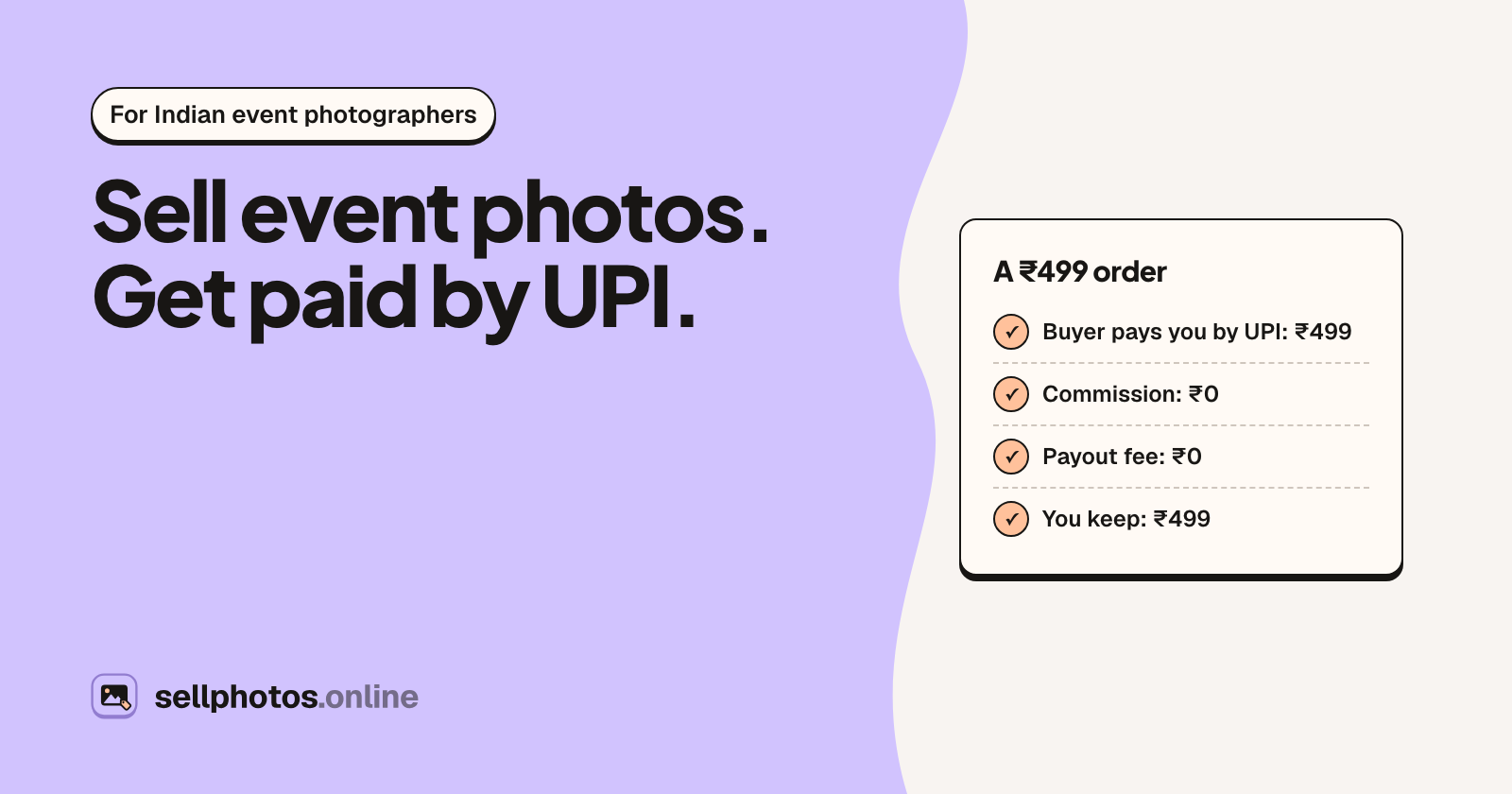
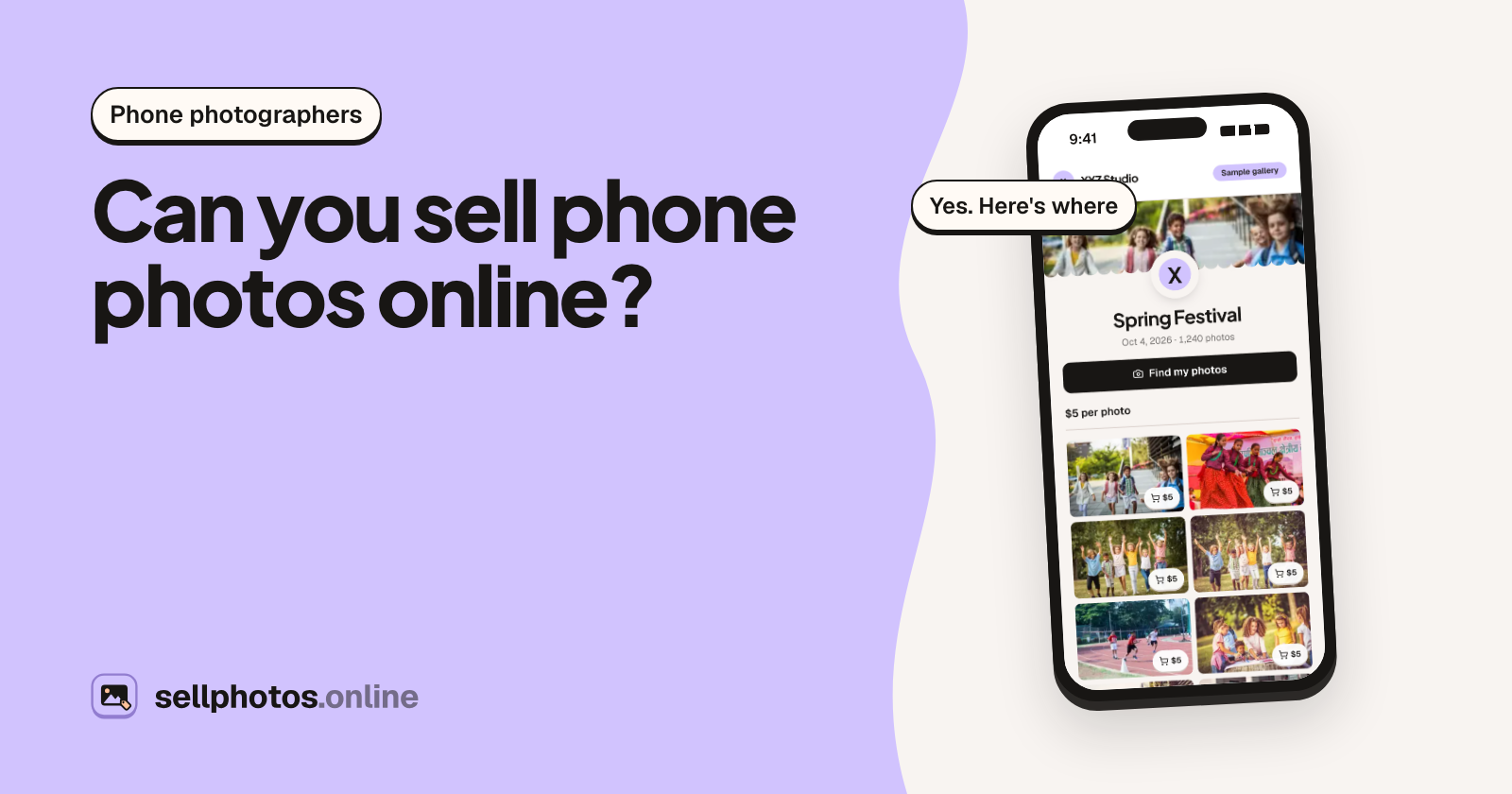
With sellphotos.online, the tool we build, you upload the photos from your phone (JPEG and HEIC both work), share one link or QR code, and each guest finds their own photos with a selfie. They pay your UPI ID directly and you approve the order. There is no commission. You pay a yearly plan from $99, and there is no free plan, so this is worth it only once you shoot events regularly.
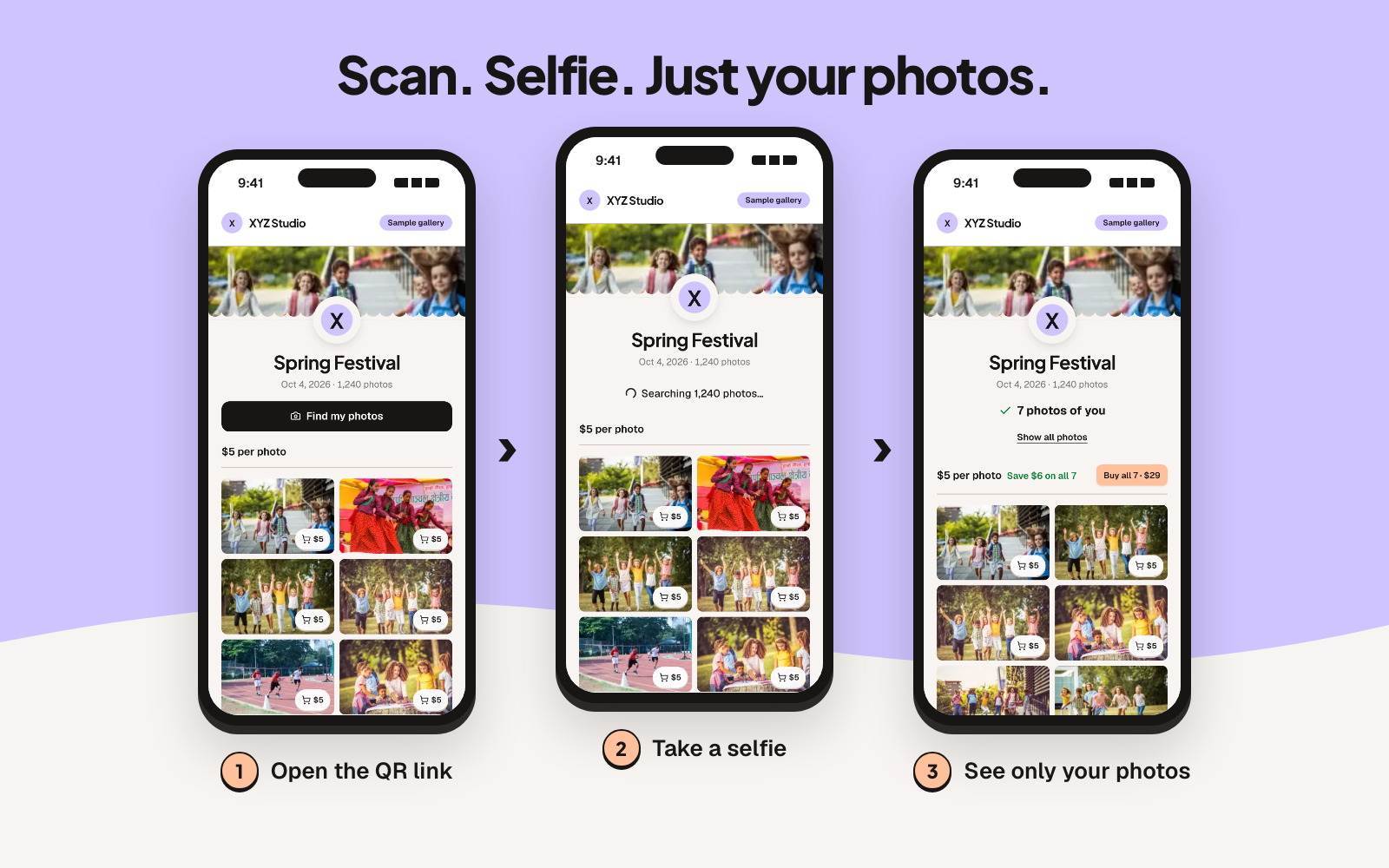
A phone is enough for daytime and well-lit indoor events. See the limits below before you promise anyone a night-time dance show.
2. To strangers, through stock sites
Shutterstock, Adobe Stock and the other stock sites accept phone photos that meet the file rules above. You earn a share each time someone licenses a photo. Each download pays little, so income comes from having many useful photos online for a long time. We compared the sites, what they pay and how the money reaches India in the best websites to sell photos online in India.
3. To local businesses
This is the quickest money on the list. Walk into ten shops or cafés with five good sample photos on your phone. Offer to shoot their products or menu for a fixed price. One yes pays more than a year of stock downloads for most beginners, and they will need new photos again next season.
What a phone still can't do
Be honest with buyers, and with yourself, about these:
- Fast action. Sports, running children and dance come out blurred or noisy, especially indoors.
- Low light. Night mode works when nothing moves. A stage with moving performers does.
- Distance. Past 2x or 3x, phone zoom is mostly a crop. You can't shoot a stage from the back of a hall.
- Big prints. A phone photo is fine on a screen and in a small print. A large wall print shows its limits.
If you start earning from events, a used entry-level camera with a zoom lens is the first thing to buy with that money.
A simple plan for your first ₹1,000
- Pick one subject near you that businesses use: food, a market, a festival, a craft.
- Shoot 50 photos in daylight. Keep the sharpest 15.
- Show them to five local businesses and offer a paid shoot.
- Upload the same 15 to one stock site, with clear titles and keywords, and keep adding.
- At the next family or society event, take photos on purpose and ask the organiser if you may offer them to the guests.
Money from any of these is income, so keep a simple record of what you earn. This post is not tax or legal advice.
See what your guests would see
Open the sample gallery on your phone and tap "Find my photos". It takes half a minute and needs no sign-up.
About sellphotos.online: an online store for event photos. Upload a shoot, share one link or QR code, and guests find their photos with a selfie and pay you directly, with no commission.