How to sell photos online and earn money in India (2026 guide)
Three ways that pay, what each one earns per photo, how the money reaches your Indian bank account, and a first-week plan.
7 min read
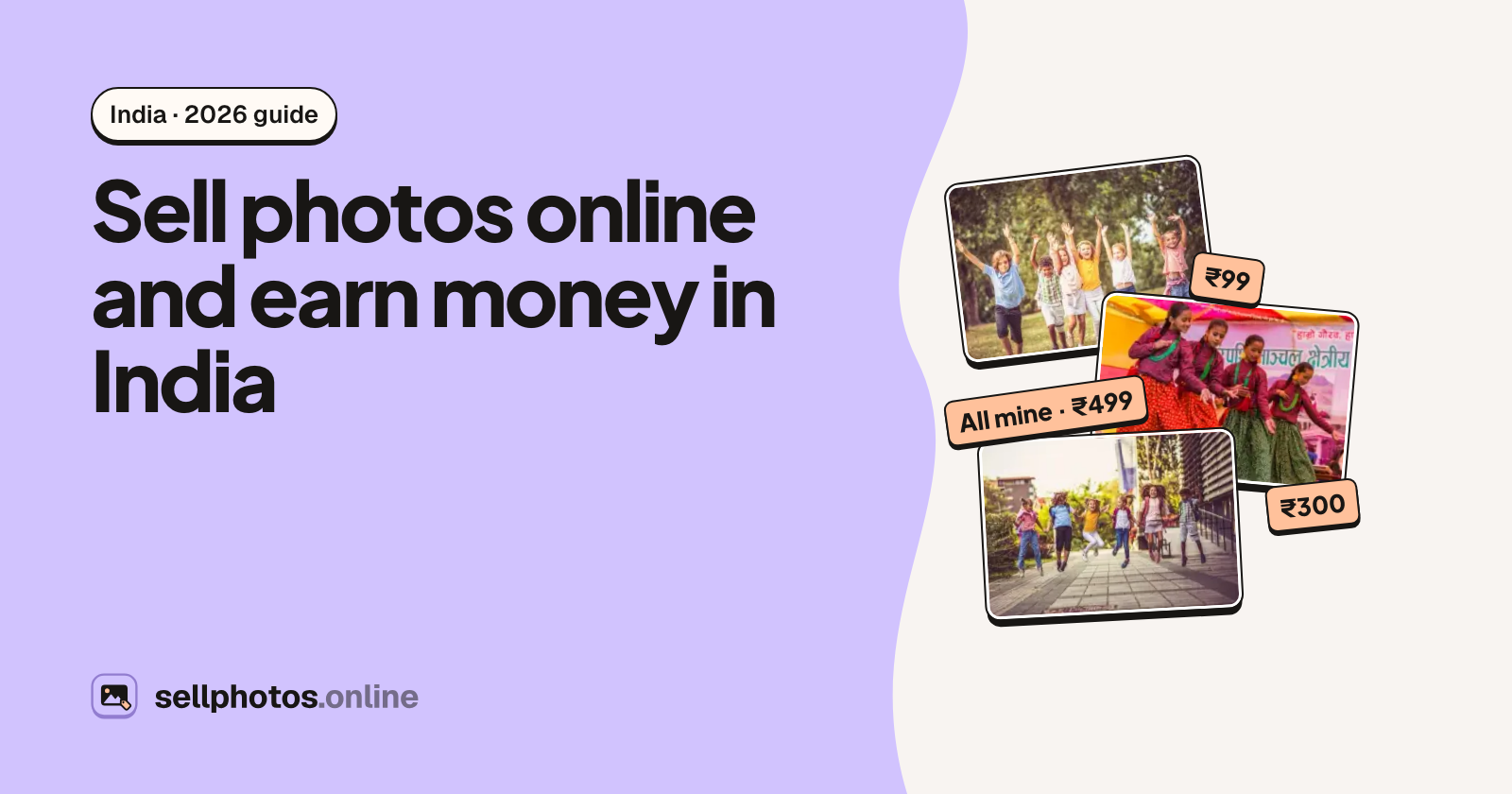
You can earn money selling photos online from India. How much depends on one question that most guides skip: who is the buyer?
There are three kinds of buyer, and each needs a different website, a different kind of photo and a different amount of patience.
| Way | Who buys | Earnings per sale | How soon |
|---|---|---|---|
| 1. Stock sites | Companies and designers you never meet | Small: often under a dollar | Slow. Months to years |
| 2. Event photos | The people in the photo | Larger: you set the price in rupees | Fast. The same week |
| 3. Your own store | Your followers and local businesses | You set it | Depends on your audience |
This guide walks through all three, with real rates checked on 12 November 2026. We build sellphotos.online, which is a tool for way 2, so you know where we stand. The guide tells you when ways 1 and 3 fit you better.
Way 1: Sell to strangers on stock photo sites
You upload photos to a site such as Shutterstock or Adobe Stock. A company somewhere needs a photo of a Mumbai local train for a presentation, searches, finds yours and licenses it. You get a share.
What it pays
- Shutterstock pays 15% to 40% of each licence, depending on how many you sell in the year. Everyone starts at 15%. The minimum is $0.10 per download.
- Adobe Stock pays a flat 33% on photos, with a minimum of $0.33 per licence.
- Alamy starts new contributors at 20% (changed on 1 September 2026).
- Getty Images / iStock pays non-exclusive contributors 15% on photos.
What does that come to? One contributor who publishes his numbers on the blog Brutally Honest Microstock reported average earnings per download for 2025 of about $0.51 on Shutterstock and $0.74 on Adobe Stock. That is one person's portfolio, not a promise. It shows the shape of stock income: small amounts, many times, over years.
How to start
- Pick subjects buyers search for. Indian daily life, festivals, food, offices, farming, small shops, students. Not sunsets and flowers.
- Check the file. At least 4 megapixels, JPEG, sharp at full size. Phone photos are accepted if they meet this; see selling phone photos.
- Get permission. A recognisable person needs a signed model release for commercial use. Private buildings, logos and artwork need one too.
- Write clear titles and keywords. "Woman selling vegetables at a street market in Jaipur, India" gets found. "IMG_4521" does not.
- Upload to two sites, and keep uploading. The same photo can be on several sites unless you sign an exclusive deal.
How the money reaches India
The big stock sites pay in US dollars through PayPal or Payoneer, usually once you cross $25 (Shutterstock, Adobe Stock). None of the large ones we checked pays into an Indian bank account directly, except Alamy, which offers bank transfer above $75.
Before the first payout they ask you to fill in a US tax form called W-8BEN. Without it, Shutterstock and Adobe Stock withhold 30% of your US sales. With it, India's tax treaty with the US brings the rate on royalties down, usually to 15%. The form is free and takes a few minutes inside your contributor account.
Stock suits you if you enjoy shooting useful, generic subjects and can keep going for a year before judging the result. Site-by-site details are in the 12 best websites to sell photos online in India.
Way 2: Sell event photos to the people in them
This is the one most guides leave out, and for many Indian photographers it pays the fastest.
Think about a school annual day. 400 children on stage, 800 parents in the hall, and every parent wants a good photo of their own child. A stock site can't sell that photo to anyone. The parent will buy it tonight.
The same is true of garba nights, convocations, college fests, marathons, cricket tournaments and society functions. The buyers are already at the event.
How it works
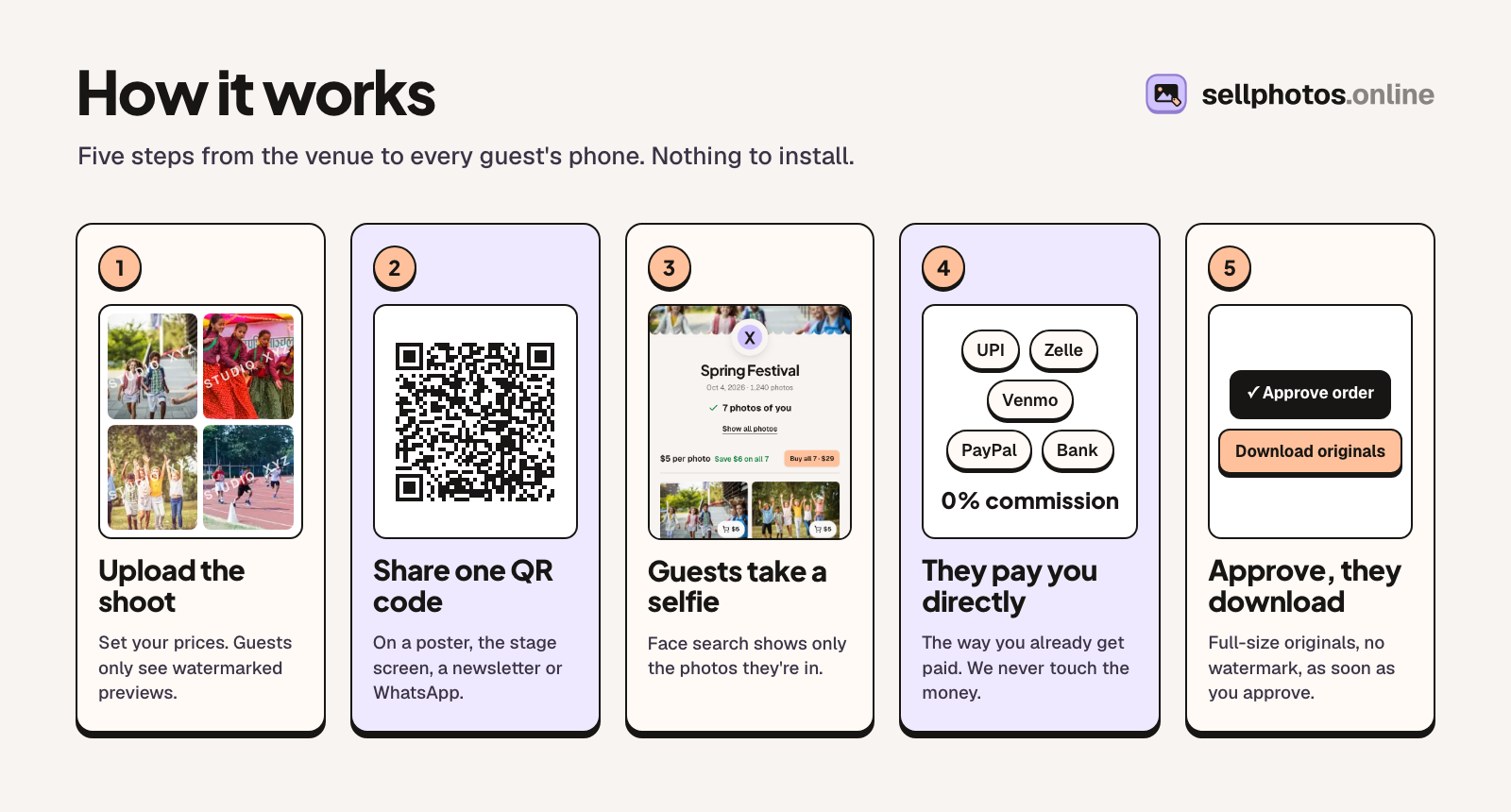
- Upload the shoot and set your prices in rupees: per photo, "all my photos", or the whole event.
- Share one link or QR code. Print it at the venue and post it in the WhatsApp group.
- Guests find themselves with a selfie. No app, no sign-up to browse. Face search shows them only the photos they are in, as watermarked previews.
- They pay you by UPI. The money goes straight to your UPI ID or bank account. They upload the payment screenshot.
- You approve, they download. Check the money arrived, approve the order, and the full-size originals unlock.
What it pays
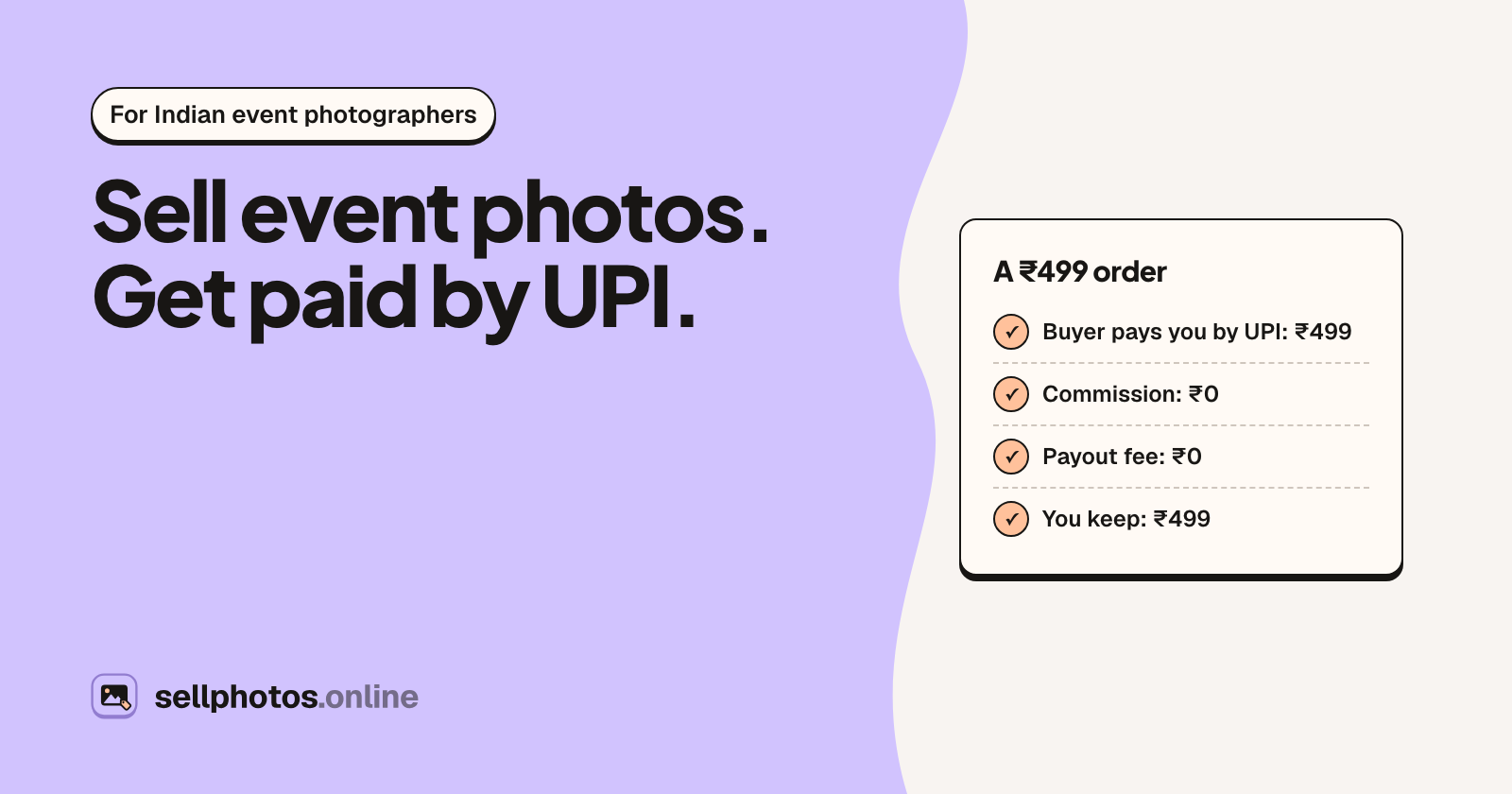
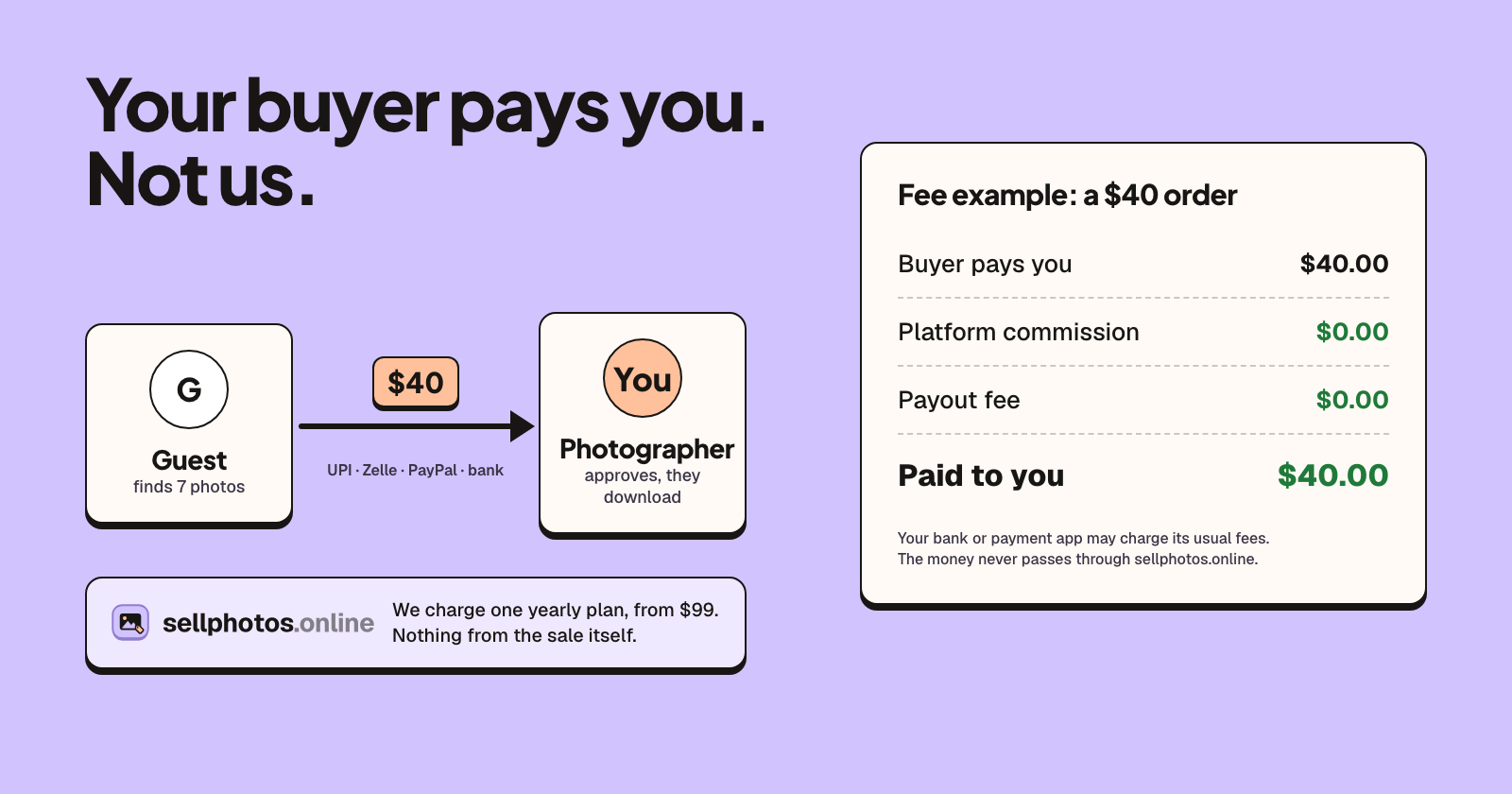
You set the price, and you keep all of it, because the buyer pays you directly.
Here is an example with made-up but reasonable numbers. 800 people attend. One in ten buys "all my photos" at ₹299. That is 80 orders and ₹23,920 from one evening. Change the three numbers to match your event and redo the sum.
What it costs
On sellphotos.online there is no commission. You pay a yearly plan from $99 for 20,000 photos and 250 approved orders. It is billed in US dollars and the checkout shows the rupee amount. There is no free plan. You also approve every paid order by hand, which is the trade-off for nobody holding your money.
Event photos suit you if you already shoot events, or can get into one: your college fest, your child's school, your housing society. Read the full method in how to sell event photos in India and get paid by UPI, or try the sample gallery as a guest would.
Way 3: Sell from your own store
If people already follow your work, you can sell to them without a stock site in the middle.
- Digital files and presets. Indian tools such as Instamojo let you sell a file and take payment by UPI or card. Its free plan charges 10% + ₹3 on a digital sale, and a plain payment link costs 2% + ₹3.
- Prints. Landscape, wildlife and heritage photos sell as framed prints to homes, cafés and offices. Your margin is the sale price minus printing, framing and delivery.
- Buyers abroad. Etsy lets Indian shops sell to international buyers only, asks for a GSTIN and pays out in dollars through Payoneer.
- Local businesses. Shops, restaurants and online sellers pay for product and menu photos. This is a service more than a store, and it is often the quickest first income.
Your own store suits you if you have an audience, or are willing to build one.
Which way should you choose?
- You have a camera, free weekends and events around you: way 2 first. It pays this month.
- You travel and have thousands of photos on a hard disk: way 1. Start uploading and let it build.
- You have 5,000 followers who like your style: way 3.
- You have only a phone: ways 2 and 3 for small events and local shops, and way 1 for daylight photos.
They mix well. Many working photographers do paid shoots, sell event photos to guests and keep a stock portfolio growing in the background. For the wider picture, see 9 ways to earn money from photography in India.
Your first week
- Day 1. Pick your way using the list above.
- Day 2. Choose your 30 best photos that fit it. Be strict.
- Day 3. Stock: open a contributor account on Adobe Stock or Shutterstock and upload 10. Events: ask one organiser if you may offer photos to their guests.
- Day 4. Stock: write titles and keywords, fill in the W-8BEN. Events: set up the event and your prices, and print the QR code.
- Day 5 to 7. Shoot something new on purpose, for the buyer you chose.
Questions people ask
Can I really earn money by selling photos online in India?
Yes. Stock sites pay small amounts per download and add up over years. Event photos pay more per sale because the buyer is in the photo. Neither is quick money without work.
How much does Shutterstock pay per photo in India?
The same as everywhere: 15% to 40% of the licence price, with a minimum of $0.10 per download. New contributors start at 15%.
Which is the best website to sell photos in India?
For stock, Adobe Stock and Shutterstock have the most buyers. For event photos, a store where guests pay you directly by UPI. For your own audience, Instamojo. We compare twelve of them here.
Can I sell photos taken on my phone?
Yes, if the file is at least 4 megapixels, sharp and in JPEG for stock sites. Phones are weakest at fast action and low light.
Is it free to sell photos online?
Joining the big stock sites is free, and they keep 60% to 85% of each sale. sellphotos.online takes no commission and charges a yearly plan instead. Free photo sites such as Pexels and Unsplash pay you nothing.
Do I have to pay tax on this income?
It is income, so it belongs in your tax return. GST registration generally becomes compulsory for service providers above ₹20 lakh of turnover a year (₹10 lakh in some states). This is not tax advice. Ask a CA once the income is regular.
Do I need permission to sell a photo of someone?
For commercial stock, yes: a signed model release. At events, get the organiser's permission first, and follow the school's or venue's photo policy, especially for children.
About sellphotos.online: an online store for event photos. Upload a shoot, share one link or QR code, and guests find their photos with a selfie and pay you directly, with no commission.